
“I know I’m not alone in the sometimes-ludicrous worry of, “I must get 8 hours sleep!” And if I wake up and it’s been 7 hours and 46 minutes, “Oh God, the day’s ruined!”
I Haven’t Been Entirely Honest with You, by Miranda Hart
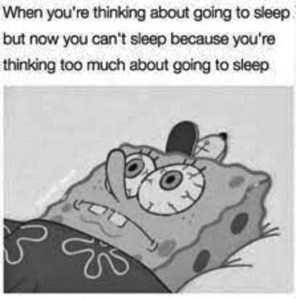 I’ve always loved sleep. Bedtime is possibly my favourite time of day. You’re thinking, “She’s crazy!” right? – Perhaps!
Stay with me … I’m going to challenge your thinking!
Growing up, my days were predictable: I woke up, went to school, played outside, and ate at mealtimes. I was sent to bed at the sound of the 8 o’clock news. I got a concessionary cuddle and a few pages of a book. And just like that, I was asleep (out cold for at least 10 hours) before I knew it. Sleep was never a concern.
So, what went wrong?
In short, adulthood happened! We all know the pressures of ‘adulting’, right?
For me – and undoubtedly for you, too – ‘adulting’ kicked in when several ‘perfect storms’ came together for me. It all began with a horrible relational trauma in my early 20s, which resulted in my taking sleeping pills to sleep. At the time, I was also ruminating about a job I dreaded. Overthinking all the ‘what if’ scenarios generated anxiety and kept me stuck in said dreaded work. Then – big mistake – I installed a computer in my room.
Over this stressful, indecisive period, I often berated myself with ‘shoulds’ and ‘could haves’.
The outcome? A decline in sleep quality, resulting in nearly a decade of insomnia and fatigue (approx. 2009-2018).
My relationship with sleep, much like my relationship with myself, had become unhealthy, and I started to wonder whether my ‘sleep-ability’ was broken.
My journey back to sleep
It has been a reflective, non-linear journey back to sleep, but I’ve now mostly regained my old self, so I thought I’d share these reflections with you.
What I’ve learnt:
- Your sleep is not broken! You were created to sleep (or, if you prefer, you’ve “evolved” to sleep). It is essential for your survival. One of the perks of life is that you spend almost half of your time with your eyes closed—rebuilding synapses, organising memories, and recharging for the next day.
- Trying to sleep, or trying to produce or control sleep is biologically impossible.
How do I know this?
Your autonomic nervous system controls sleep; it’s your body’s ‘involuntary’ regulatory system. It governs digestion, breathing, and heart rate. Can you control those? No!
- Ask any child who tries to stay awake till midnight to catch Father Christmas coming down the chimney or the Tooth Fairy popping a £5 under her pillow. She can’t keep her eyes open long enough!
- Ask the busy Mum who sits down on the sofa after a long day to watch her favourite series but falls asleep before the You can’t make yourself stay awake indefinitely!
- In fact, trying not to sleep is one sure-fire way to fall asleep – try it tonight! Try and stay up super late tonight. I dare you!
- This is a psychological phenomenon called ‘paradoxical intention’ – if I try to sleep, I won’t. If I try not to sleep, I will. This is also sometimes called the ‘Pink Elephant Paradox’.
+++++++++++++++++++
*Try the Pink Elephant experiment:
Close your eyes for 1 minute and think about anything you like. Except … absolutely do not think about a pink elephant.
Q: How many pink elephants visited your thoughts in that minute?
+++++++++++++++++++
Stop all the sleep efforts!
- Stop all your sleep efforts. Stop trying to ‘get sleep right’. All that trying is setting yourself up for failure. It simply can’t be done.
- “BUT…”, you say! “But what about camomile?” “What about exercise?” “What about yoga?” “What about cutting out caffeine?” “What about candles and music and wine?” … and and and … None of these are bad things! Many are really good – especially regular exercise and fresh air. But if you are using them to ‘control’ or ‘produce’ sleep, then they have become ‘sleep efforts’, and I urge you to re-read points 1-3 above.
Befriend wakefulness:
- This is the second most important lesson I have for you!
It is literally (actual meaning) not dangerous to be awake. We’ve all done it before and lived.
Soooo …
If we change our THINKING about sleep, our hyperarousal should decrease, and sleep will likely come.
It might take practise.
Sleep tight!!
SMALL PRINT:
P.S. There is a caveat: The three things that CAN and DO affect sleep for everyone are: 1.Circumstances beyond your control. That’s life; everyone has bad nights some of the time. 2. Hyperarousal. This is a fear state—essentially, the anxiety we sometimes feel when we fear that sleep will elude us or when we fear being awake at night. In other words, our thoughts about sleep cause us to feel fearful (perhaps heart racing, shallow breathing). 3. Medical reasons – neurological, sleep apoenea etc.
P.p.s. References for this blog: Cognitive Behavioural Therapy for insomnia (CBTi), ‘This is Natto’ by Daniel Erichsen (a book desperately needing a good editor, but proposes the very helpful concept of ‘befriending wakefulness’) and Beth Kendall, sleep coach, blog.
 Nyamazela