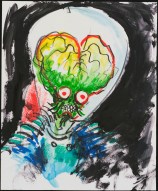
“It is always hard to see the purpose in wilderness wanderings until after they are over.”
The Pilgrim’s Progress by John Bunyan
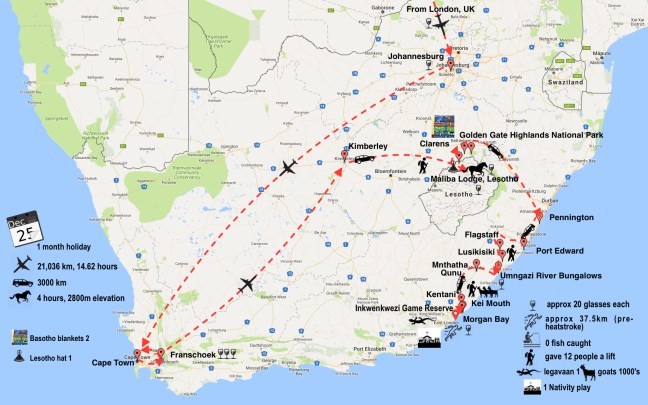
 By popular demand, I give you our 12 fellow travellers on our South African #roadtrip:
‘Petrol Man’: outside Bloemfontein:
We took a country road towards the Lesotho mountains. TomTom was not pleased. Petrol Man explained that his car had run out of petrol. In parts of the Free State you get the feeling that you’re driving from the middle of nowhere to the middle of nowhere. So we drove on. Eventually we came to a juncture. There was’t even a tiny pin-prick of a suggestion of a village, but with nothing else to suggest we turned down the dust track. What materialised eventually was a twilight-zone-like-derelict-one-stop-hamlet consisting of a road, 6 dwellings, a couple of people and a petrol station! Continue reading Our short interlude into the lives of 12 walkers
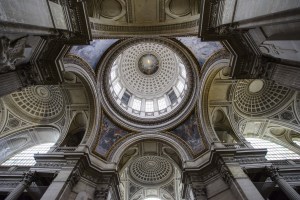 We walked slowly, our eyes fixed on the domed roof. The headphone-thingy talked about symmetry, symbolism, liberté, égalité, fraternity. Léon Foucault’s pendulum swung back and forth beside us where it has almost always been since 1851. Christ looked on from his mosaic-ed position on the eastern wall, down at La Convention Nationale sculpture, as if blessing French nationalism …
 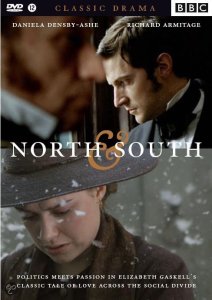 Have you read or watched Elizabeth Gaskell’s North and South (BBC version 2004)? Imagine the camera panning across the English countryside. Birds are tweeting, yellow roses adorn the hedgerows in full bloom, the sun shines, there are parties and pretty frocks? That’s the South. Now put a grey-blue filter over the lens and picture a hazy, sooty cityscape with chimneys and rooftops for miles, inclement weather, a crying child, a wide-eyed youngster in a flat cap and the constant din of industrial machinery. Voila – I give you, The North.
 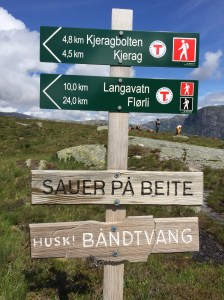 Sitting on my bottom, edging my foot onto the boulder and trying hard not to look down at the 3200ft abyss below, I had one of those out of body experiences.
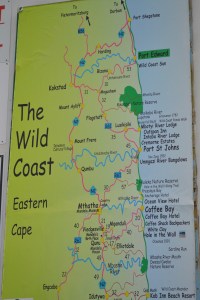
 A long dirt road led to a small village on the Wild Coast.
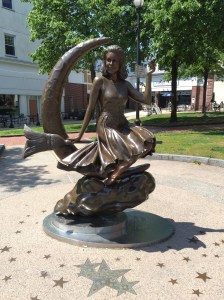 In summary, Arthur Miller’s play is a classic parable of mass hysteria drawing a frightening parallel between the Salem witch-hunt of 1692 and the McCarthyism Cold War fears of 1950s America.
 “… Here at our sea-washed, sunset gates shall stand
 I walked into a small steamy room next to the cow shed. “Should I pack wellies?” I’d asked Hubby a week before. “No they’re having a drought,” he’d assured me.
 Nyamazela