
“Visible mess helps distract us from the true source of the disorder.”
The Life-Changing Magic of Tidying Up: The Japanese Art of Decluttering and Organising by Marie Kondo
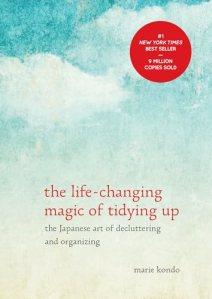 Next Monday (31 March), Hubby and I will finalise the purchase of our ‘new’ house in Fulham. I’m incredibly excited to start nesting, but I’m also mindful that our seller faces the challenging task of sorting through and packing up her belongings and the memories accumulated over 28 years in that home, where she raised two daughters and lived life – there’s a lot of stuff!
According to Dr Diane Roberts Stoler, author of ‘The Resilient Brain’,
Clutter creates chaos and hampers focus, limiting your brain’s ability to process information. It acts as a visual distraction, increasing cognitive overload and reducing working memory. A disorganised, cluttered space makes concentration difficult. Research shows that individuals are less irritable, more productive, and better at processing information in organised environments.
I have a couple of useless superpowers. One is an advanced olfactory system that allows me to correctly guess what you have on your sandwich from a distance of 6-10 meters. The other is sorting and decluttering.
So … I have always been curious about the KonMari method of decluttering, so I read Marie Kondo’s book a few months ago.
Here are seven lessons and random thoughts learned …
1. “Does it inspire joy?” This question has come to define her decluttering method. The idea is that if it’s an item you don’t truly love or that doesn’t excite you, it should be discarded. MK adopts a reverse tidy-up approach. Instead of throwing away what you don’t like or want, you keep what you love, use regularly, and which makes you happy. Essentially – the rest should go. Brutal for those of us who think along lines like, “I haven’t used or worn this in five years, but I might need a Chico-the-clown outfit one day?”
 2. MK’s method inspired a UK TV Show called ‘Sort Your Life Out’ with the hilarious Stacey Solomon. You can find some clips on YouTube here. I think it’s brilliant.
3. MK writes, “I have yet to see a house that lacks sufficient storage. The real problem is that we have far more than we need or want.” As much as I love the creative and clever storage ideas and space-saving videos circulating on social media (which can be rather addictive), I find myself in reluctant agreement with MK. I believe it’s feasible for those storage solutions to inadvertently become part of the problem.
4. In my opinion, the most brilliant aspect of the KonMari method is its approach of avoiding the tidying of sections within rooms and not addressing small areas over time, which contradicts some prevailing wisdom. Instead, it advocates for sorting items by category and doing so as quickly as possible. For example, lay out all your coats, all shoes, all books, all stationery, and so on. This way, you may be shocked to discover that you possess 25 tins of Heinz Tomato Soup, some of which are now past their expiry date, allowing you to reduce duplicates.
5. The book didn’t elaborate much on ‘aesthetics’, other than suggesting that you keep objects you love in places where you can see and appreciate them. I know the Japanese are often depicted as minimalists, and I tend to favour minimalism as well, as I feel that too many ornaments collect dust, causing unique pieces to become lost among the trinkets. However, I also struggle to feel at home in a room that doesn’t appear cosy and lived-in, lacking personality and a sense that people live there. I also struggled with her folding techniques which would drive me mad and aren’t practical when living with other humans.
5. MK didn’t mention regifting, repurposing, or recycling once. Perhaps that will change with a new edition. It was all ‘throw-away’, ‘dump-it’, ‘bin-it’. I love the redemptive message of an old object fixed and revived for a new setting. Stacey Solomon and her team do this a lot!
6. MK suggested speaking to your belongings, for instance, saying farewell and thank you to an old handbag for carrying your things. I couldn’t handle this, I’m afraid; it’s just absurd. Honestly, you’d run the risk of having yourself committed. Instead, go out, visit a friend, talk to them about how proud you are of your decluttering, and have a cuppa. Or better yet, invite your friend to a fun day of helping you declutter!
7. MK suggested speaking to your belongings, for instance, saying farewell and thank you to an old handbag for carrying your things. I couldn’t handle this, I’m afraid; it’s just absurd. Honestly, you’d run the risk of having yourself committed. Instead, go out, visit a friend, talk to them, and have a cuppa.
SMALL PRINT:
P.s. Spare a thought and a prayer for our seller and her family as she navigates this new chapter and faces some challenges this week.


Don’t be fooled not all Japanese are good at de cluttering. This article will be shared with numerous friends and pinned on our fridge as a gentle reminder . I will take a photo of Grahams library
LikeLike
Next time you’re in SA, you are more than welcome to help me declutter at mine!
LikeLike